
Town of Babylon, NY
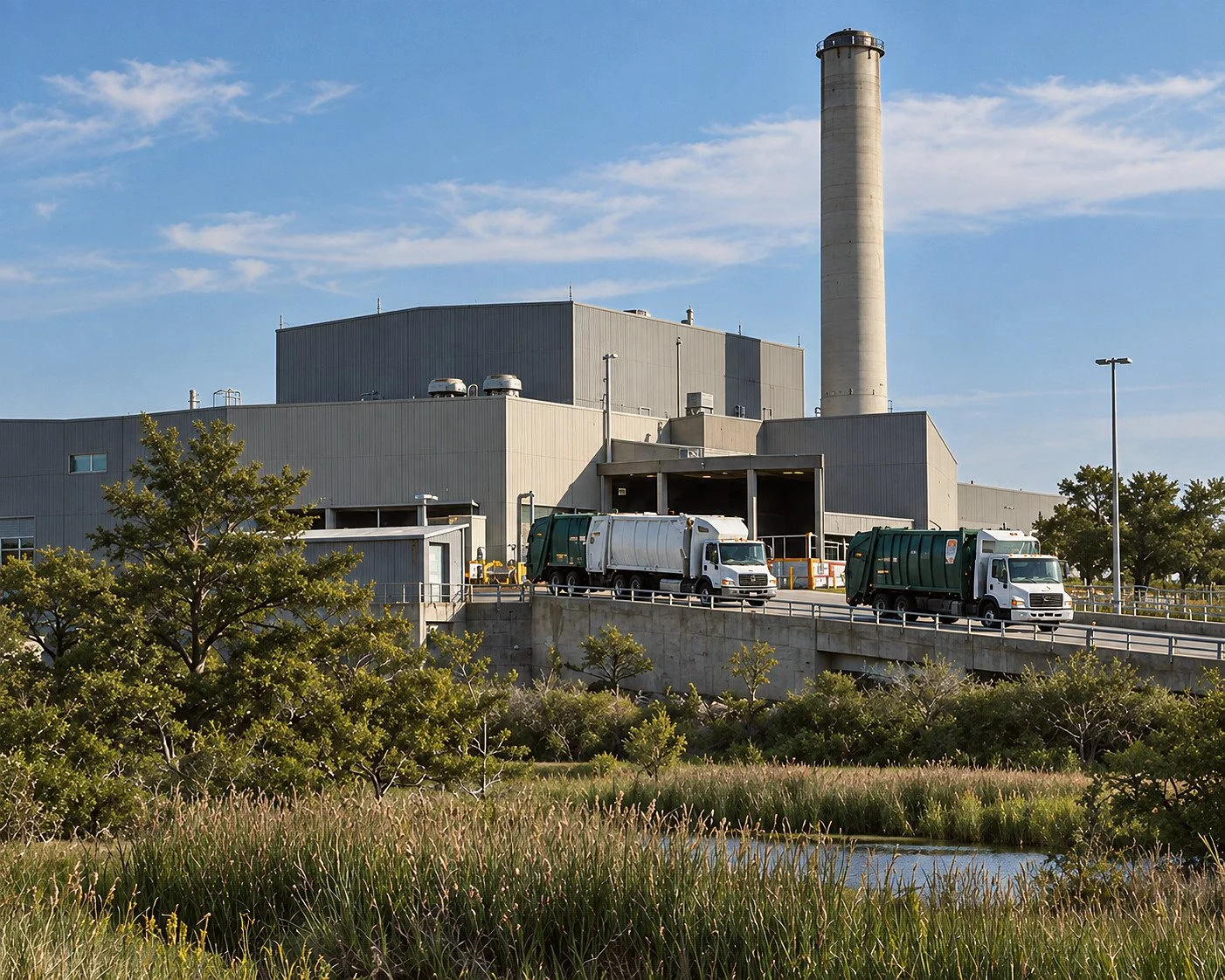
Intermunicipal Agreement, Privatization Assistance, and Transfer Station Improvements
GBB coordinated the execution of inter-municipal and contractor agreements to combine the solid waste management systems of the Town of Babylon and the Town of North Hempstead. GBB was instrumental in the development and implementation of a series of agreements that provide for:
- Modernization of North Hempstead’s transfer station;
- Privatization of transfer station operations;
- Predictable and cost-effective waste disposal and recycling services for a 20-year term;
- Full utilization of Babylon’s integrated solid waste management system;
- Formation of a Joint Planning Unit under New York State law;
- Minimization of capital requirements by North Hempstead;
- Preparation of a combined Solid Waste Management Plan; and
- Meeting state recycling goals.
GBB, on behalf of the Town of Babylon, solicited competitive proposals to design and modify the North Hempstead transfer station and to operate the transfer station. Agreements were negotiated with private contractors to deliver waste to Babylon facilities and other alternate recycling and disposal sites. Materials handled are residential waste, commercial waste, construction and demolition debris, yard waste, tires, commingled bottles and cans, newspapers, and white goods. GBB’s scope of services included: the preparation of a request for proposal; proposal evaluation report, five project agreements, permit applications, and a combined Solid Waste Management Plan.
Solid Waste Management Planning and Assistance
GBB prepared the Solid Waste Management Plan/Generic Environmental Impact Statement (SWMP/GEIA) and recycling plan, and provided technical assistance in implementing those plans. The plans are part of an overall integrated solid waste management strategy that includes recycling, composting, waste-to-energy, and landfilling. The SWMP was the first State-approved plan on Long Island. Because the information in a solid waste management plan and a generic environmental impact statement are complementary, the Town elected to combine these two documents.
The Town of Babylon's SWMP/GEIS is a comprehensive document that describes the Town's current and future solid waste management system and recovery goals. The primary solid waste management alternatives (waste reduction, recycling and reuse, waste-to-energy, land burial, and other methods, and no action) are evaluated with respect to their environmental impacts. The SWMP/GEIS concludes with a description of the integrated solid waste management system chosen by the Town and establishes a detailed implementation timetable.
GBB was the lead consultant for the development, implementation, procurement, acceptance testing, and operations monitoring for a 225,000 tons per year Resource Recovery Facility and 750 tons per day Commercial and Residential Materials Recovery Facility (CRRF). GBB prepared the Environmental Impact Statement (EIS) for the CRRF. GBB's role was to manage the overall procurement and development process for both facilities, which entailed preparing the necessary Request for Proposal (RFP) documentation; advising the Town on procurement strategy; conducting a proposers' conference; evaluating proposals; advising on proposer selection; leading negotiations with the selected contractor; participating in permitting and financing activities; conducting a risk analysis; preparing a bond issue feasibility report; and monitoring construction activities; and conducting acceptance testing.
GBB monitored operations at the Babylon Resource Recovery Facility on behalf of the Town. GBB's efforts in this respect have significantly improved facility efficiency, resulted in near-optimal distribution of waste into the facility, and helped maximize net electricity revenues to the Town. These efforts resulted in several million dollars per year of benefits to the Town.
GBB also provided landfill planning and procurement services, including developing a dedicated monofill for MSW combustion ash and a double-lined bypass waste landfill to support the Town's Resource Recovery Facility. The state-of-the-art ash disposal facility was the first permitted ashfill on Long Island. GBB managed and monitored all activities and reports monthly to the Town. GBB also completed a Draft Request for Proposals that solicited proposals for the testing, collection, and processing of Landfill Gas (LFG) at the Town landfill site.
GBB also managed two state-funded research programs to (1) evaluate the effectiveness of a used oil collection program; and (2) establish a construction waste and demolition debris tracking system and disposal analysis.
Residential and Commercial Recycling Facility Procurement
GBB has worked closely with the Town of Babylon to plan a cost-effective approach to processing and handling recyclable materials. The planning effort led to a unique procurement approach for a combined commercial and residential recyclables facility for mixed containers, mixed paper, corrugated cardboard, scrap metals, wood, tires, and construction and demolition debris. The facility is sized at 1,300 TPD, and also transfers non-recyclable waste to the Ogden Martin Resource Recovery Facility in Babylon, New York. GBB prepared the RFP and reviewed the vendor proposals. Project financing was completed in October 1992; a Service Agreement was signed in July 1991; and the facility began commercial operation in November 1992. GBB also prepared the feasibility report for the bond offering.
Full-Service Waste-to-Energy Procurement Assistance
GBB managed the full-service procurement for a 225,000-tons-per-year resource recovery facility for the Town of Babylon. The facility is sized to produce 17 Mw of electrical energy for sale to the Long Island Lighting Company. GBB’s role was to manage the overall procurement and development process, which entailed preparing the necessary Request for Proposal documentation, advising the Town on procurement strategy, conducting a proposers conference, evaluating proposals, advising on proposer selection, leading negotiations with the selected contractor, participating in permitting and financing activities, preparing a bond issue feasibility report, and monitoring construction activities. GBB maintained close coordination with Babylon’s other legal and financial advisors.
GBB also prepared the Feasibility Report for the official statement, which raised $88.9 million in industrial development bonds and monitored the design and construction of the Babylon Resource Recovery Facility, as well as the start-up and acceptance tests. The Facility achieved commercial operation, and GBB continued to monitor the Facility operation for compliance with the Service Agreement and various environmental, legal, and financial requirements. From project conception to commercial operation, GBB worked closely with the Town of Babylon in managing its Resource Recovery Facility development.
GBB’s efforts in this respect have significantly improved the facility's efficiency, resulting in a near-optimal distribution of waste into the facility and maximizing net electricity revenues to the Town. These efforts equate to several million dollars per year of benefits to the Town.