
Mr. T Carting
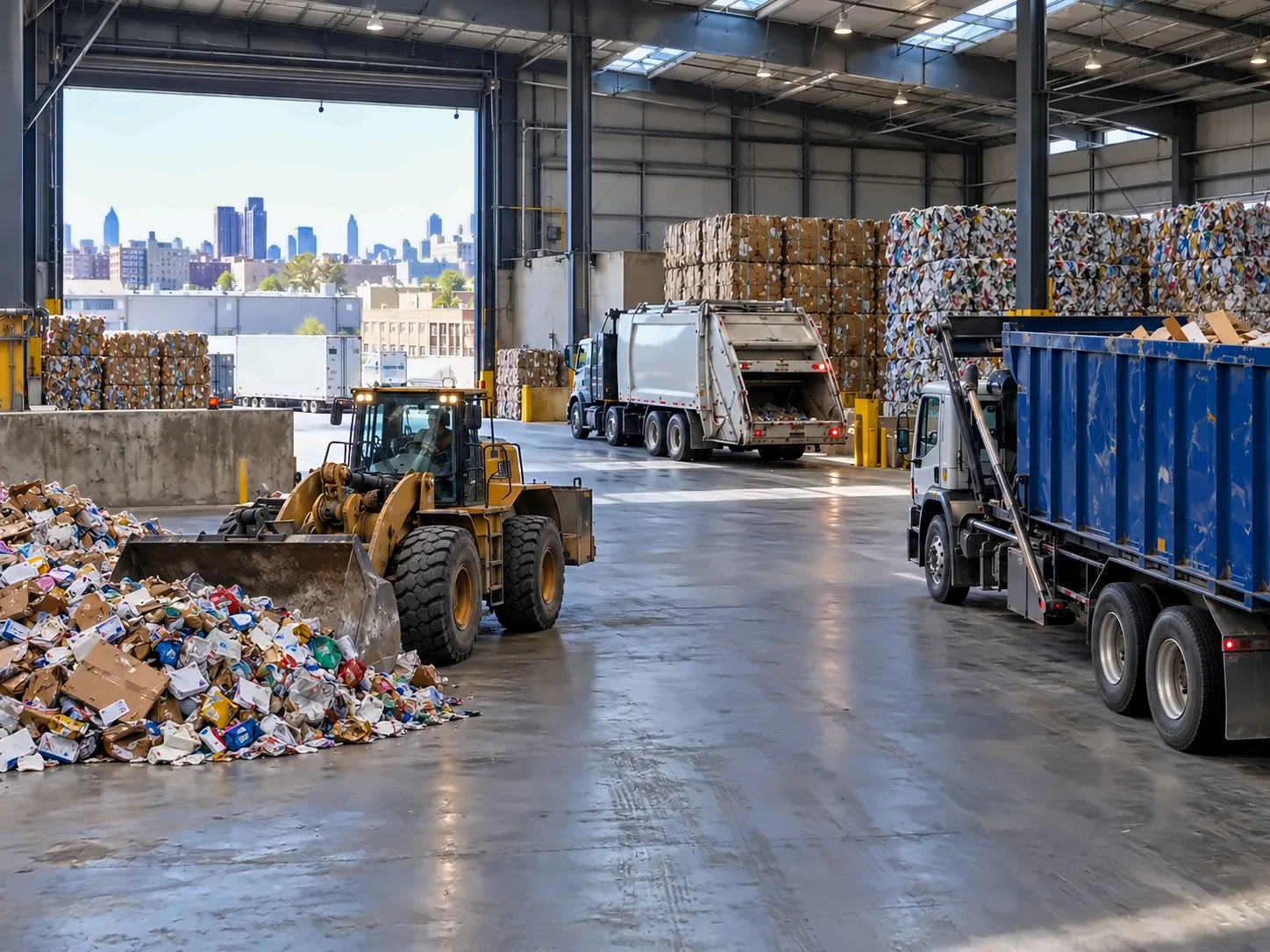
As New York City established Commercial Waste Zones (CWZ) to serve the needs of commercial waste generators within the city and released a Request for Proposals (RFP) for collection services, GBB provided direct assistance to the team assembled by a confidential regional private-sector client to respond to the procurement process. Assistance included, but was not limited to:
- Leading the strategizing process to assemble a responsive, winning team and proposal;
- Planning for team merger and integration;
- Expanding and merging brand identities;
- Advising on ways to develop company culture;
- Advising on Zero Waste Plan development;
- Expanding and formalizing safety training;
- Preparing proposal documents;
- Planning and development of proposed transfer station; and
- Preparing transfer station layouts.
Background: New York City Commercial Waste Zones
On November 20, 2019, then-Mayor de Blasio signed LL199 of 2019 into law, requiring the establishment of zones for commercial waste throughout New York City. The result of years of planning, analysis, and stakeholder engagement by the City of New York Department of Sanitation (DSNY), the CWZ program would ideally create a safe and efficient commercial waste collection system that advances the City’s Green New Deal and zero waste goals while providing high-quality, low-cost service to NYC businesses.
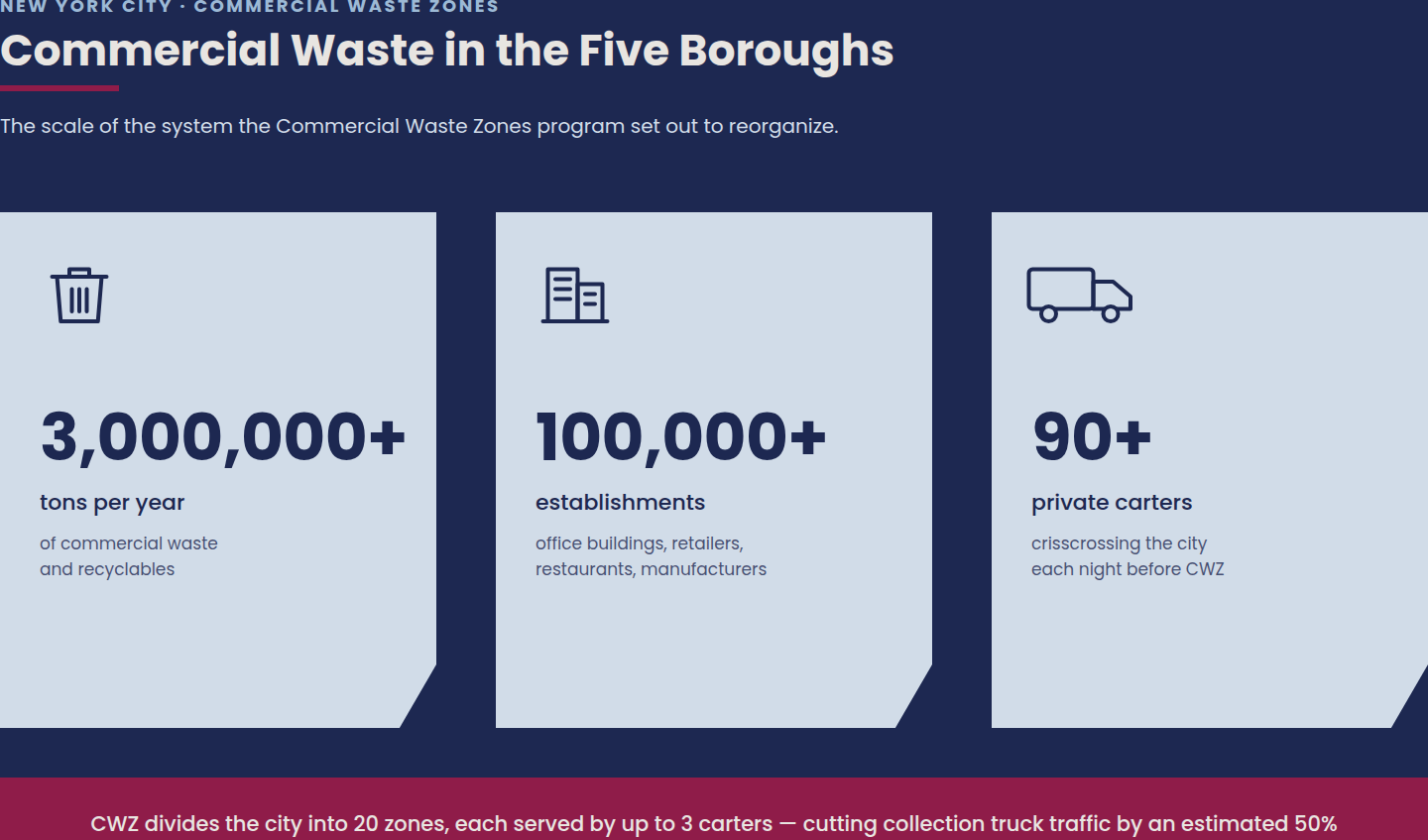
While DSNY collects trash and recycling from residential buildings, more than 90 different private carters crisscross the city each night to service the city’s 100,000 commercial businesses.
Upon implementation, the CWZ program would divide the city into 20 zones, each served by up to three carters selected through a competitive process. Five citywide contracts would also be awarded for the collection of containerized waste and compactors. DSNY estimates this approach would reduce truck traffic associated with commercial waste collection by 50 percent, eliminating millions of heavy-duty truck miles from NYC streets every year while strengthening service standards and allowing customer choice. In addition, commercial waste zones would create a new regulatory framework that allows the City to achieve several additional program goals:
- Zero Waste: Reduce commercial waste disposal and incentivize recycling
- Environmental Health: Reduce truck traffic throughout the city to reduce air pollution and improve quality of life
- Pricing: Provide fair, transparent pricing with low prices for businesses
- Customer Service: Strengthen customer service standards and establish accountability
- Health and Safety: Improve training and safety standards to make the industry safer for workers and the public
- Labor and Worker Rights: Improve industry labor standards and uphold worker rights
- Infrastructure and Waste Management: Prioritize investments in clean, modern fleets and facilities that make up a reliable, resilient, and sustainable waste management system
- Robust, Competitive Industry: Create a system that works for carters of all sizes and prevents overreliance on any single company