
Northeast Maryland Waste Disposal Authority
A multidisciplinary team led by GBB developed a holistic plan, building on the firm’s deep understanding of the County’s past, that incorporated the current state and realities of the solid waste management system and anticipated future trends, needs, and plans.
As a first step, the County created a Solid Waste Work Group – composed of County leadership, community members, and industry representatives – to examine current solid waste collection and disposal policies and practices and make recommendations for implementing innovative industry practices and trash diversion strategies to reduce the overall volume of trash produced in the County.
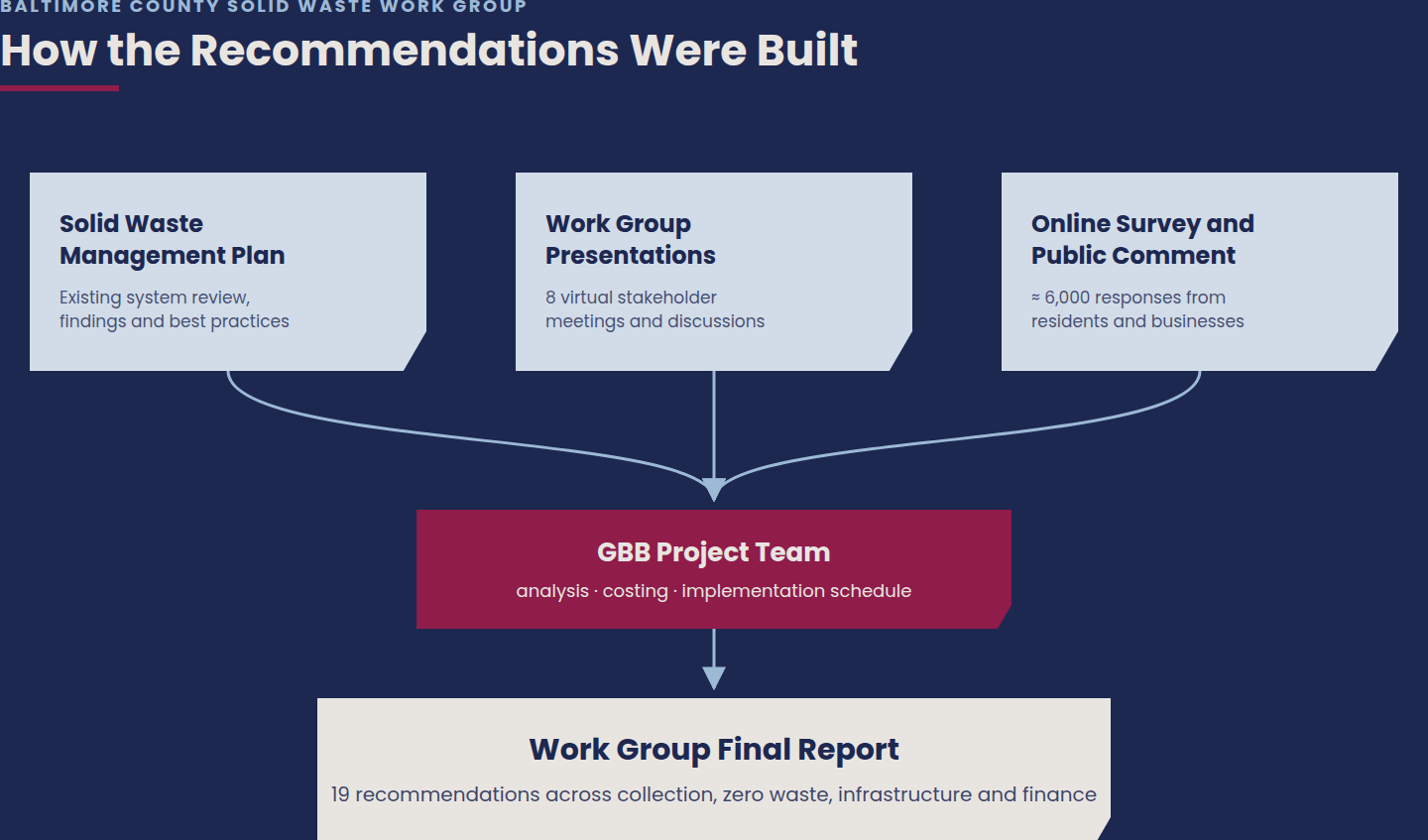
Key to this fast-paced initiative was the GBB Project Team’s multi-pronged approach, which included:
- Detailed review of the County’s system and development of findings, best practices, and recommendations.
- An online survey of Baltimore County residents and businesses (in total approximately 6,000 responses for a county with a population of nearly 850,000)
- A series of eight virtual stakeholder meetings, during which findings and recommendations were reviewed and innovative technologies and solid waste management solutions were discussed (video recordings of the meetings are available on the County’s Work Group webpage)
As a final step, the GBB Project Team developed the Final Report alongside the County and NMWDA, which included detailed descriptions of recommendations, a schedule for implementation, estimated costs for implementation (both capital and operating), anticipated cost reductions or revenues gained, and anticipated change(s) in recycling and disposal tonnages.
19 Recommendations
The final report of the Baltimore County Solid Waste Work Group offers 19 recommendations for implementing innovative industry practices and trash diversion strategies to reduce the overall volume of trash produced in the County:
Collection
Establishing 5-year service agreements for haulers
Eliminating plastic bags for yard materials
Providing technical assistance to haulers
Purchasing new recycling carts
Implementing pilot projects to evaluate 3 service configurations
Zero Waste – New Programs & Services
Advancing a Zero Waste Strategy approach for bulk items
Implementing a Zero Waste Education and Outreach Strategies program
Infrastructure & Disposal
Transferring 215,000 tons/year from Eastern Sanitary Landfill to non-County disposal
Establishing a new Mixed Waste Processing
Outsourcing organics processing to a third party for pilot projects
Planning and permitting an Eastern Sanitary Landfill vertical expansion
Designing/Permitting/Building a new Western Acceptance Facility as the current one located in a floodplain
Adding yard material transfer capability at the Central Acceptance Facility
Planning for MRF Maintenance and Future Replacement
Financial & Contracts
Conducting a Solid Waste Full Cost Accounting review
Establishing new system funding mechanisms
Promoting regional collaboration
Planning for a long-term process for collection
Other Considerations
Performing an organizational, staffing, and equipment review
The report is available here: Final Report of the Baltimore County Solid Waste Work Group (PDF).