
Wasatch Solid Waste District, UT
For over a decade, GBB has worked closely with the District on multiple projects, providing strategic guidance and reviewing facilities / programs / services to develop and enhance its portfolio of sustainability initiatives to meet the evolving long-term needs of the community:
Development of State-of-the-Art Mixed Waste Processing Facility
Feasibility Study
As the District’s waste-to-energy (WTE) facility was due for major upgrades, the district learned that the steam contract from the WTE facility would not be renewed. With this loss of revenue, the decision was made to close the facility, leading to a much higher fill rate for the landfill, which was due to reach capacity within 20 years. Due to the need to reduce landfilling and increase material diversion, the District evaluated its options and asked GBB to perform a feasibility analysis — with preliminary layouts, costing scenarios and financing options — for developing one of the following:
- Transfer station to move materials to a regional landfill
- Transfer station with a mixed waste processing facility to recover recyclable commodities
- Transfer station with a mixed waste processing facility to recover recyclable commodities and produce a cement kiln fuel
Procurement
After deciding to proceed with the development of a transfer station with a mixed waste processing facility to produce recyclable commodities and cement kiln fuel at the site of the old waste-to-energy facility, the rigorous procurement process, approached from a strategic standpoint, was initiated. The RFP team, led by GBB, considered various contracting approaches — including contracting each step separately; design/build; and design/build/operate – and selection criteria were discussed and set forth. The RFP document was then structured to encourage proposers’ participation and creativity to develop a versatile and flexible system.
As part of the final contract development process, negotiation points included factors such as payment schedules; performance guarantees; testing protocols; spare parts inventory supplied with system; break‐in/startup support period; construction sequencing; performance schedule; liquidated damages; and insurance.
Owner’s Representative for Design, Construction, and Testing and Acceptance
GBB was tasked to act as Owner’s Representative during the construction. As such, GBB supported WIWMD during the Design Phase to monitor the overall process and report on the system development relative to contractual obligations of the Contractors. During the Construction Phase, GBB also supported WIWMD with duties that included attending weekly construction meetings; conduct periodic site inspections; observing progress; coordinating, reviewing, and recommending change orders as required; and reviewing and signing off on invoices.
During the Testing and Acceptance Phase, GBB performed duties that included reviewing Construction Certification and Acceptance Report for substantial completion with respect to equipment; assisting with punch list development, coordination, execution and documentation; and witness commissioning of equipment, commercial start-up monitoring and testing, and final acceptance.
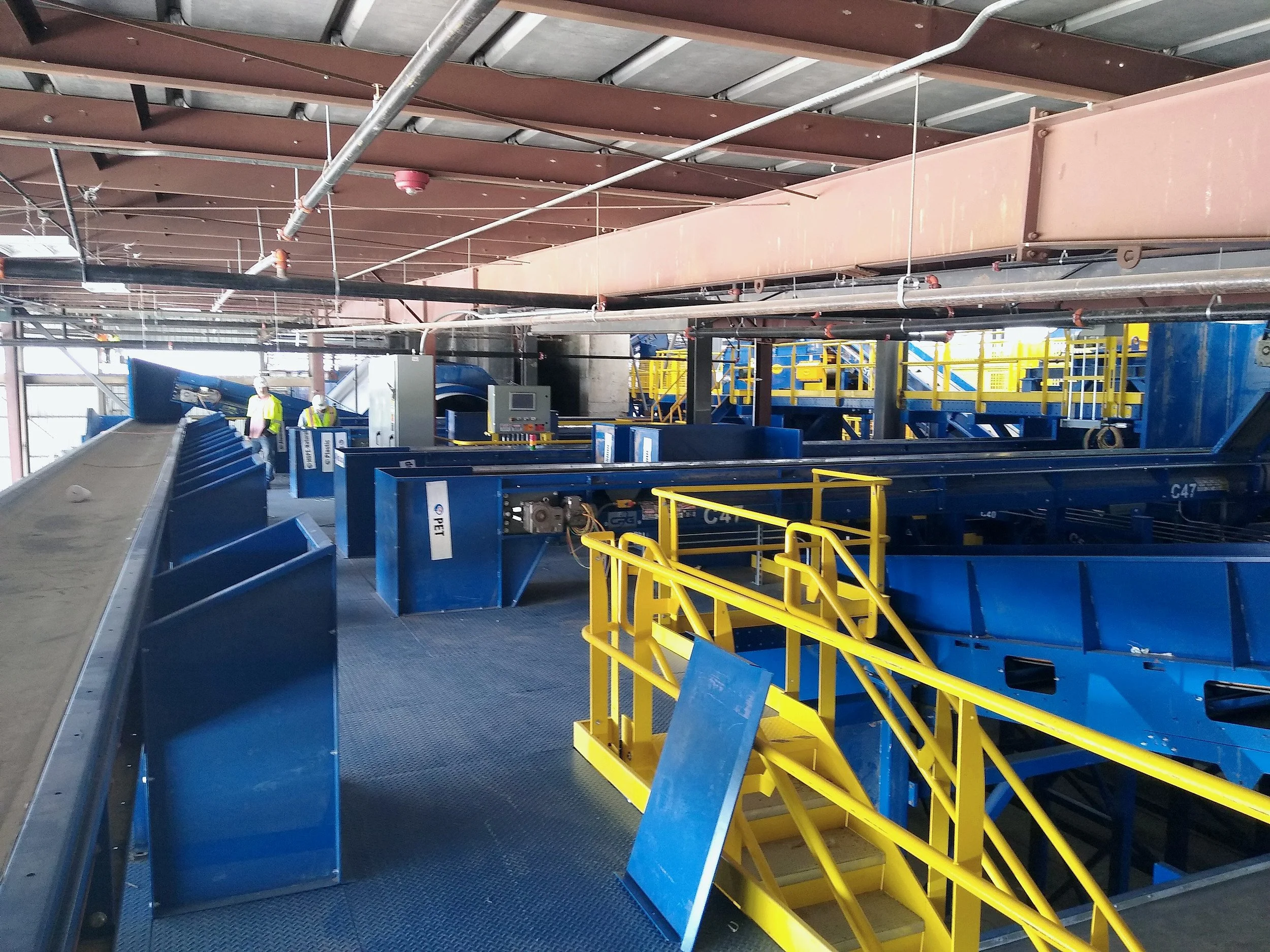
In June 2020, operations began at the new state-of-the-art facility. Waste is processed in a highly mechanized system that recovers recyclable materials for sale to market. Materials currently recovered for recycling include clean cardboard, aluminum cans, empty steel cans, and plastic bottles (#1 and #2). Paper and plastics (#3 through #7) are recovered to create an engineered fuel that can be used by industrial sources to offset the use of coal. Organics, such as food waste and grass, are concentrated and can be used as feedstock for anerobic digestion that generates renewable natural gas. Remaining residue from the facility is transferred to a regional landfill, which extends the life of the local landfill.
Videos featuring the operations of the new system and its capabilities are available at www.wasatchintegrated.org/material-recovery-and-transfer-facility
Development of Integrated Waste Management Plan
The Wasatch Integrated Waste Management District tasked GBB, a long-time trusted advisor, with preparing a new Solid Waste Management Plan. The assignment included supporting the District in engaging citizens in a high-level outreach effort; taking a strategic view of solid waste management for the next several years; researching, collecting, analyzing, and drawing upon salient information from key District documents; developing and modeling alternatives and scenarios; and developing a new updated, enhanced Plan.
This plan presents the existing system, provides guidance, and sets forth goals of increasing the diversion of Wasatch’s material streams from its landfill, improving its solid waste infrastructure, expanding disposal alternatives, and evaluating current services and opportunities to ensure that all residents have safe, efficient, and effective access to waste collection and/or drop-off opportunities during the Plan time period of 2023-2032, and beyond. While this is a ten-year plan, the projections covered in the analysis project twenty years into the future, to account for when the landfill will reach its full capacity.
Update and Implementation of Solid Waste Management Plan, including Facility Procurement
After approval of the District’s Integrated Solid Waste Management Plan update prepared by GBB, the team was tasked with the implementation of facility additions and system modifications tasks, including:
- Leading the procurement process for Owners Engineers for the design and construction of:
- an expansion to the existing Mixed Waste Processing Facility (MWPF) to allow an increased recovery of recyclable materials and the processing of collected single stream recyclable material; and
- a new transfer station to load and deliver municipal solid waste to the landfill;
- Obtaining an agreement with South Davis Sewer District to accept organic material currently separated at the existing MWPF;
- Further evaluating the creation of an engineered fuel from the light residual fraction of material created at the MWPF to be used at Holcim cement.
Solid Waste Management Plan Update
GBB was selected to prepare an Update to the Solid Waste Management Plan for Davis and Morgan Counties, Utah, which are within the Wasatch Integrated Waste Management District. This substantial update to the original Plan included solid waste projections, a review and assessment of the existing solid waste management system and its costs, an assessment of public information tools and programs, an evaluation of options to increase waste reduction and recycling and to apply best management practices that have been successful in other communities, and a recommended implementation program and schedule. The plan update process was guided by an advisory group of the District Board.
10-Year Energy Recovery Facility Operations and Capital Plan
GBB was selected to perform an analysis of (1) the Davis Energy Recovery Facility (DERF) maintenance and capital investment plan to evaluate facility reliability and availability improvements, and (2) the impact of the planned improvements on the District’s economics as they relate to the extension of the District’s current contract with Hill Air Force Base (HAFB) for the sale of steam generated at the DERF. Extending the contract with HAFB for ten years helped ensure that any maintenance and improvements to DERF operations will be supported by a consistent and suitable price for steam.